
Most Popular Flooring Trends for 2027: What’s In, What’s Fading and How to Choose
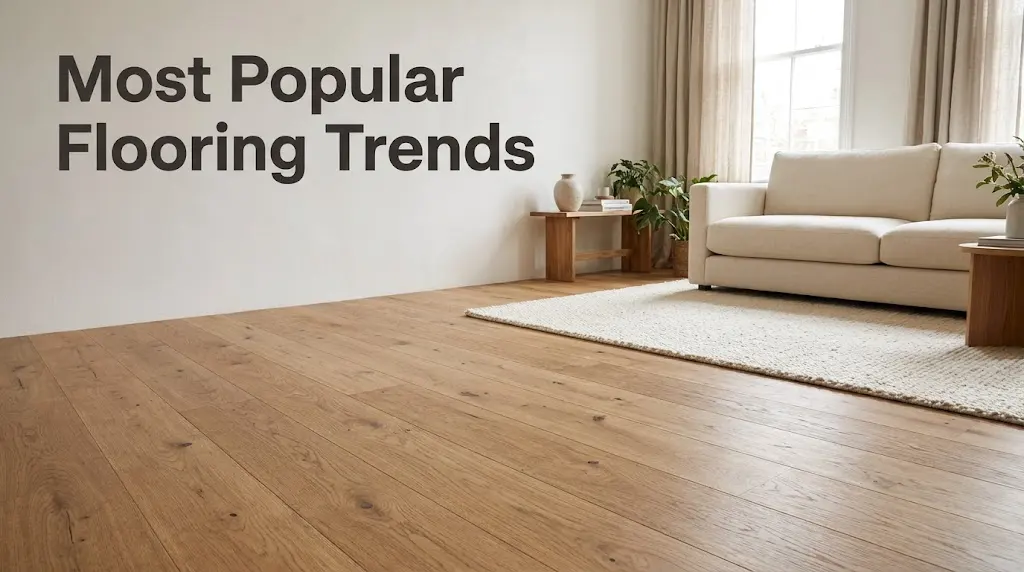
The most popular flooring trends share one idea: floors should look natural and cope with real life. Warm wood tones, wide planks, patterned layouts, tougher vinyl and earthy stone are leading the way. Cool gray and high-gloss surfaces are fading.
But popular does not always mean right for your home. A floor that looks perfect in a photo can be a poor match for a busy kitchen, a muddy dog or a damp basement.
This guide separates what people buy from what only looks good online. For each of the latest flooring trends, you’ll see why it’s popular, where it works, what can go wrong and who should choose it.
What Are the Most Popular Flooring Trends Right Now?
The most popular flooring trends are warm wood tones, wide-plank engineered oak, herringbone and chevron patterns, better-quality luxury vinyl flooring, matte finishes and warm natural stone. Many homeowners are also restoring old hardwood instead of replacing it. Cool gray and high-gloss floors are losing favor.
Here is the quick view. The staying-power ratings are our own judgment. They reflect how versatile, practical and easy to change each look is.
| Trend | How common it is | Works best in | Main drawback | Staying power |
| Warm wood tones | Mainstream | Most living spaces | Color shifts with the light | High |
| Wide-plank engineered oak | Mainstream, premium | Open-plan rooms, concrete slabs | Costs more; needs a flat subfloor | High |
| Better-quality luxury vinyl | Mainstream | Kitchens, basements, busy homes | Cannot be refinished | Medium to high |
| Herringbone and chevron | Growing | Entries, living and dining rooms | Higher labor cost and more waste | High |
| Matte and honed finishes | Mainstream | Busy homes | Natural stone still needs sealing | High |
| Warm stone and stone-look porcelain | Growing | Kitchens, baths, entries | Hard and cool underfoot | High |
| Refinished hardwood | Mainstream | Homes with sound wood floors | Dust and time out of the room | High |
| Water-resistant laminate | Value choice | Living rooms, bedrooms, halls | Standing water can still cause damage | Medium |
| Wool and natural-fiber carpet | Growing | Bedrooms, stairs | Needs careful stain cleaning | Medium to high |
| Terrazzo and checkerboard | Design-led | Entries, kitchens, baths | Strong look can limit future schemes | Medium |
| Microcement | Design-led | Modern extensions | Specialist install; can show marks | Medium |
What Homeowners Choose vs. What Designers Show
Most lists of home flooring trends mix two different things: the floors people commonly choose and the looks designers love. Both are useful, but they answer different questions. A look can be everywhere online and still be rare in real homes.
What Shoppers Are Looking At
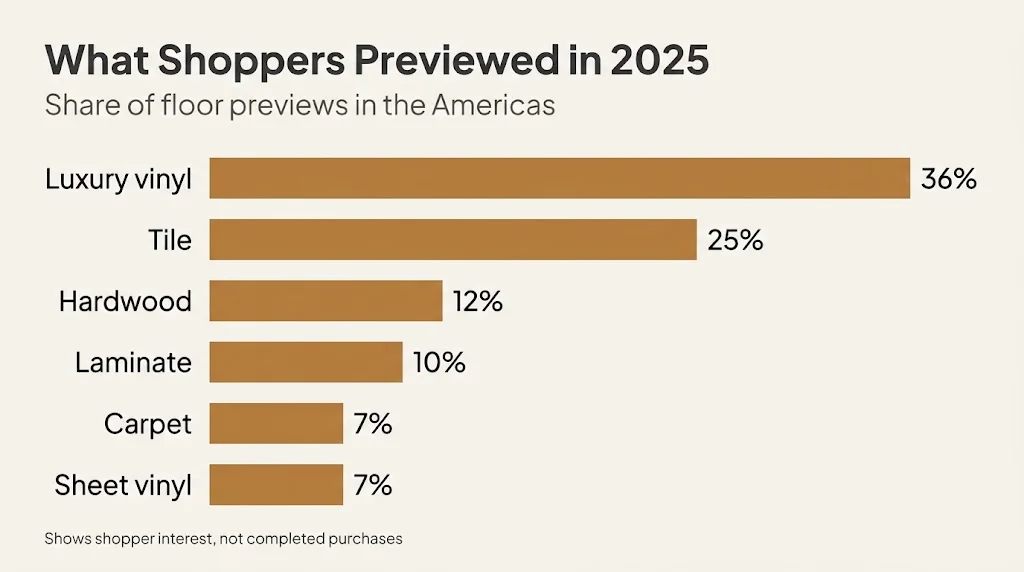
A 2026 report from a flooring visualization company studied 240 million shopper interactions. These tools let people preview floors in photos of their own rooms. In the Americas in 2025, shoppers previewed these floor types most:
- Luxury vinyl: 36%
- Tile: 25%
- Hardwood: 12%
- Laminate: 10%
- Carpet: 7%
- Sheet vinyl: 7%
These numbers show interest, not finished purchases. Tastes also differ by region. Tile led in Europe at 31%, while luxury vinyl led in Asia at 44%.
What Has Changed in Real Homes
One of the biggest long-term trends in flooring is the move from carpet to hard surfaces. US trade data shows carpet fell from 32% of residential remodels in 2012 to 19% in 2022. Almost all of that share went to rigid vinyl.
Hardwood plays a different role. Trade estimates put it at about 12% to 14% of the US flooring market by dollar value. It is a smaller category, but it remains the premium choice many buyers aspire to.
Why Vinyl’s Fast Growth Is Slowing
Vinyl is still a leading choice, but its boom has cooled. Some low-priced rigid vinyl had quality problems, according to US trade reporting. Industry leaders now describe a more settled market. Some buyers want real wood for authenticity, while others choose laminate for value.
That is good news for you. Stronger competition means more real choice at each budget.
How to Spot a Lasting Trend
Ask three questions before you commit to any of these modern flooring trends:
- Does it solve a practical problem? Matte finishes hide scratches, so they should outlast a purely visual fad.
- Does it suit many home styles? Warm oak works in old and new houses. A bold pattern suits far fewer.
- Can you change it later? You can refinish a wood floor in a new color. You cannot easily recolor installed tile.
The more times you answer yes, the safer the choice.
Trending Floor Colors: Warm Tones Have Overtaken Cool Gray
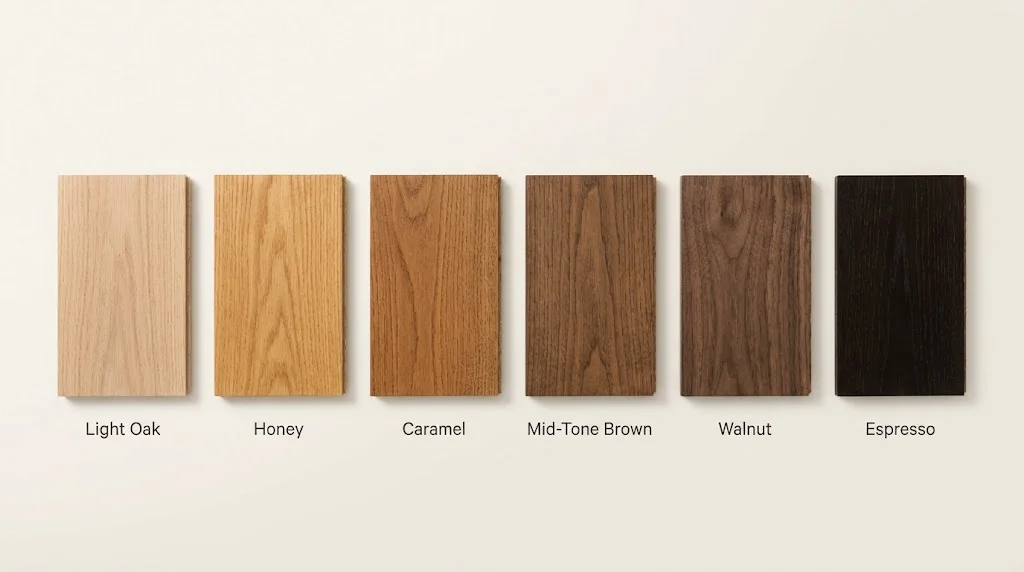
Warm tones are more popular than cool tones right now. Mid-tone wood leads, and darker shades are gaining ground. In an October 2025 survey of 1,000 US homeowners with wood floors, 51% preferred mid-level tones. Another 27% chose darker tones, and 22% chose white or light tones.
That survey came from a floor care brand and covered only people who already own wood floors. Treat it as a helpful signal, not a picture of every home.
Honey, Caramel and Mid-Tone Browns
These colors sit between pale oak and deep walnut. They feel warm without making a room dark.
- Why it’s popular: Mid-tones pair easily with cream walls, wood furniture and natural fabrics.
- Works best in: Living rooms, open-plan spaces and bedrooms.
- Advantages: They hide dust and small scratches better than very dark or very pale floors.
- Watch out for: Strong orange undertones can look dated, especially beside warm wood cabinets.
- Choose it if: You want a safe, long-lasting color for the whole home.
Light and Blonde Oak
Light oak has dominated modern homes for years. Some designers now favor warmer honey tones, but light oak remains a strong choice. It looks fresh and suits Scandinavian and minimal rooms.
- Works best in: Small rooms and spaces with limited daylight.
- Advantages: It makes rooms feel brighter and hides pale dust well.
- Watch out for: Very pale, ashy finishes can feel cold. Ask for a natural or slightly warm undertone.
- Choose it if: You want a calm, airy home and like modern style.
Dark Walnut, Smoked and Espresso Tones
Richer, moodier woods are returning after years of pale floors. Social media is helping. In the same survey, 67% of Gen Z and 57% of millennial homeowners said social media influences their flooring choices.
- Works best in: Large, bright rooms and formal spaces.
- Advantages: Dark floors add depth and contrast, and they make wood grain feel luxurious.
- Watch out for: They show dust, pet hair and scratches more easily. They can also make small, dim rooms feel smaller.
- Choose it if: You have good light and don’t mind cleaning more often.
Tonal Floors Instead of High Contrast
A tonal scheme uses floors, walls and furniture from the same color family. Think soft taupe walls with warm oak floors and honed stone.
- Why it’s popular: It makes a home feel calm and connected.
- Works best in: Open-plan homes and small homes where rooms flow together.
- Watch out for: Without enough texture, a tonal room can feel flat. Add rugs, woven fabrics and visible wood grain.
- Choose it if: You prefer a quiet look that won’t tire you over time.
What About Gray Floors?
Cool gray is fading among designers because it clashes with today’s warm finishes. Yet neutrals of all kinds, including gray, still made up about 91% of US floor previews in the shopper report above.
So gray has not vanished. If you already have it, you don’t need to rip it out. Warm rugs, wood furniture and softer wall colors can balance it well.
How to Test a Floor Color at Home
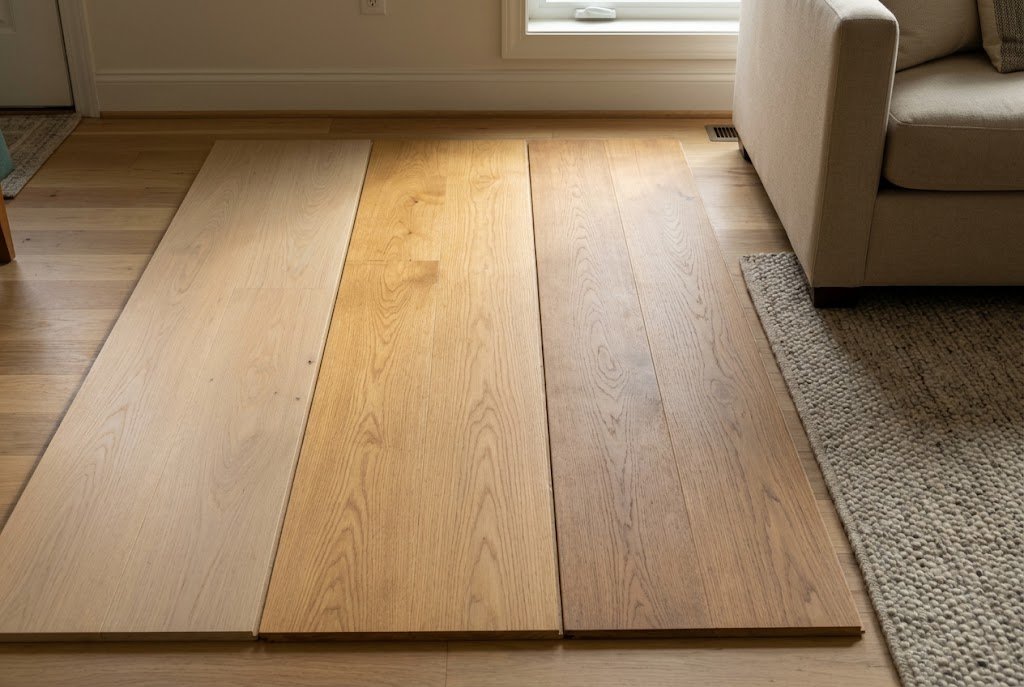
Color mistakes are common and expensive. Testing takes only a few days.
- Order the largest samples you can get.
- Lay them on the floor, not on a table or against a wall.
- Check them in morning, afternoon and evening light.
- Place them beside your cabinets, sofa and wall color.
- Look at several boards, because natural wood varies from plank to plank.
A tip for busy homes: pick a color close to your local dirt and your pet’s fur. It will hide far more day to day.
Hardwood Floor Trends That Hold Their Appeal
Yes, hardwood floors are still trending. Designers and homeowners want real materials, and few floors feel as natural as wood. A major benefit is that you can often sand wood and give it a new finish, which helps it outlast changing styles.
White Oak Stays on Top
White oak is the leading species across much of North America, according to wood flooring trade reporting. It has a balanced grain and takes both light and dark stains well.
- Why it’s popular: It suits modern and traditional homes alike.
- Works best in: Living rooms, bedrooms, hallways and open-plan spaces.
- Advantages: It is fairly hard, widely available and easy to match later.
- Watch out for: It costs more than basic options, and it is so common that it may not feel unique.
- Choose it if: You want wood that will work with several future design changes.
Wide and Long Planks
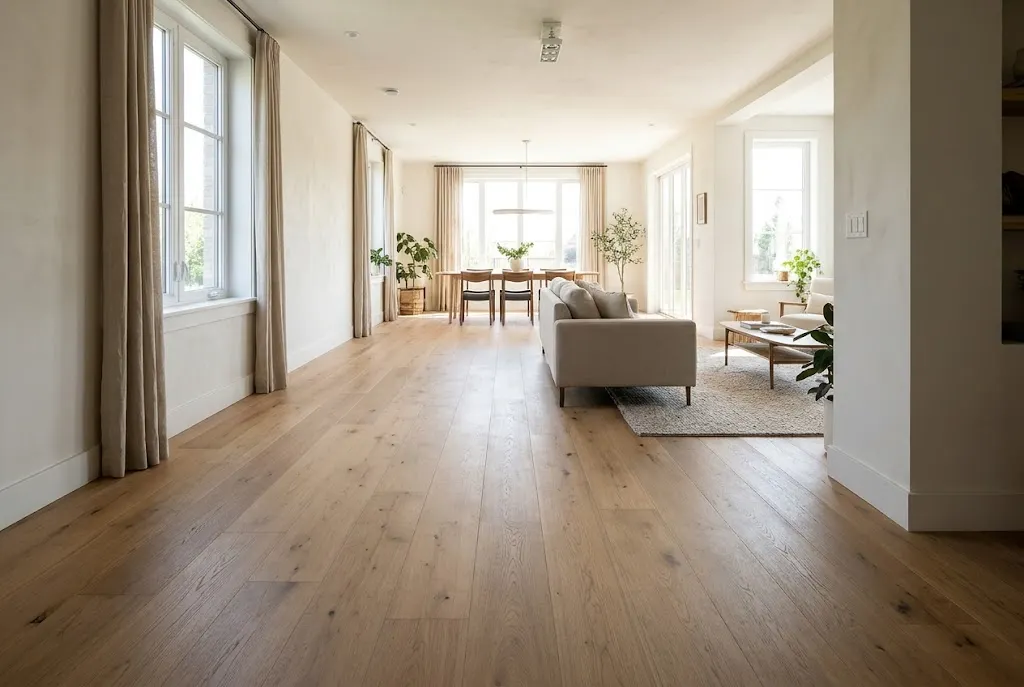
Many wide-plank floors measure about 7 to 10 inches across. Fewer seams let the natural grain stand out and make a room feel calmer.
- Why it’s popular: It suits large, open rooms and simple modern interiors.
- Works best in: Living rooms, bedrooms and new builds.
- Advantages: The floor looks more expansive, with fewer visual breaks.
- Watch out for: Wide boards react more to changes in humidity. They can cup, which means the edges rise above the center. They also show an uneven subfloor more clearly.
- Choose it if: You have a flat subfloor and steady indoor humidity. Engineered wood is usually the safer wide-plank choice.
Mixed-Width and Lived-In Wood
Mixed-width floors combine boards of different sizes. Knots, color changes and visible grain are welcome here. Wire-brushed and oiled surfaces add to the relaxed, natural look.
- Works best in: Older homes, farmhouse styles and relaxed family spaces.
- Advantages: Natural character helps hide small marks.
- Watch out for: Textured wood can be very hard to sand later. Oiled floors also need periodic care.
- Choose it if: You like a floor that looks better as it ages.
Herringbone, Chevron and Modern Parquet
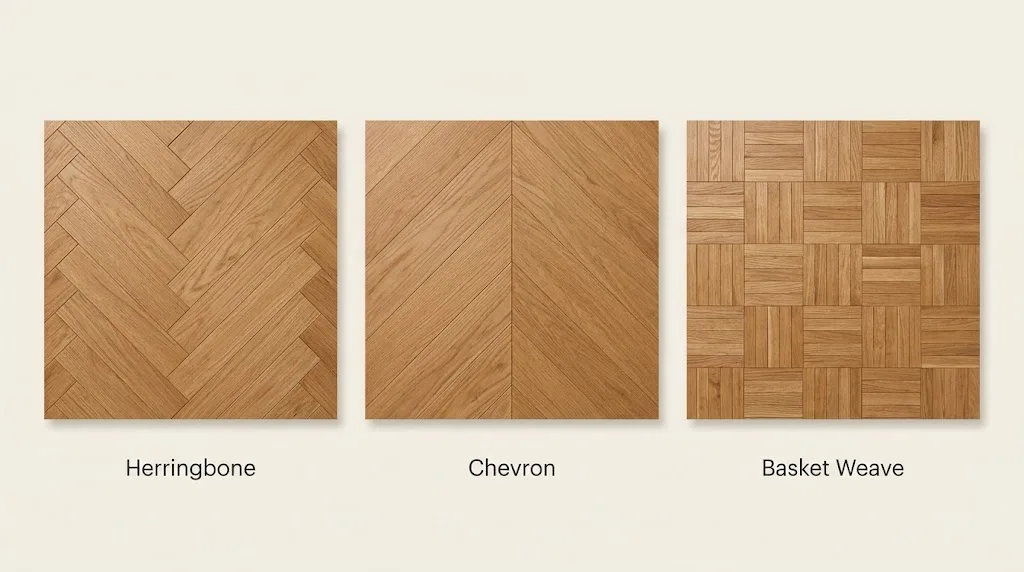
Patterned wood is making a strong comeback. In herringbone, the ends of rectangular boards meet in a staggered zigzag. In chevron, angled ends meet to form a clean V. Parquet flooring covers the wider family of small wood patterns, including basket weave.
- Why it’s popular: Pattern adds craftsmanship and movement without adding color.
- Works best in: Entries, dining rooms, living rooms and period homes.
- Advantages: It gives even a simple room a sense of detail.
- Watch out for: Labor costs are higher, and you must order extra material to cover cutting waste. Refinishing can also be harder because the grain runs in several directions.
- Choose it if: You plan to stay a while and want the floor to be a feature. To limit cost, use the pattern in one main area.
Matte Finishes and the Just-Sanded Look
Matte and low-sheen finishes have replaced shiny lacquer as the modern standard. Clear finishes leave wood looking fresh and natural. Waterborne finishes, which use water as their main carrier, are also growing in demand.
- Works best in: Nearly every room, especially busy spaces.
- Advantages: Scratches, dust and footprints are less obvious than on gloss.
- Watch out for: Matte does not mean stronger. Compare the finish system and its warranty.
- Choose it if: You have kids, pets or lots of daylight that would highlight marks.
Engineered or Solid: Which Fits Your Home?
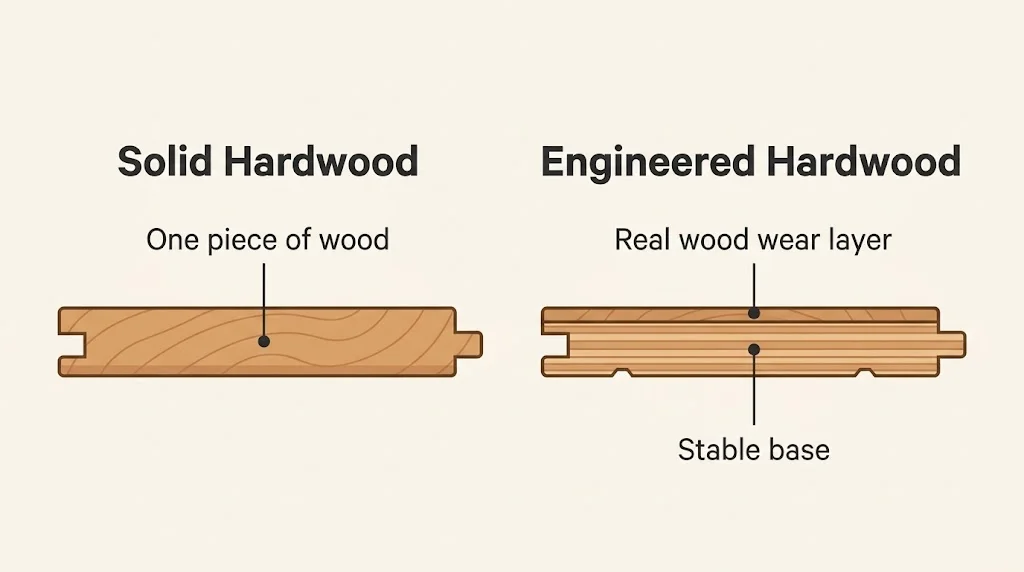
Both floors use real wood. Solid wood is one piece of timber. Engineered wood has a real wood top, called the wear layer, over a stable base.
| Factor | Solid hardwood | Engineered hardwood |
| Stability in changing humidity | Lower | Higher, though not waterproof |
| Concrete slabs and underfloor heating | Often unsuitable | Often suitable; check the maker’s rules |
| Refinishing | Can usually be done many times | Depends on wear-layer thickness |
| Wide planks | Greater risk of movement | Usually more stable |
| Best choice for | Long-term homes on wood subfloors | Slabs, heated floors and open-plan rooms |
If you want to refinish engineered wood later, check the wear layer before you buy. National Wood Flooring Association guidance points to at least 2.5 mm (3/32 inch). Some low-cost products have a veneer too thin to sand.
Restoring Instead of Replacing
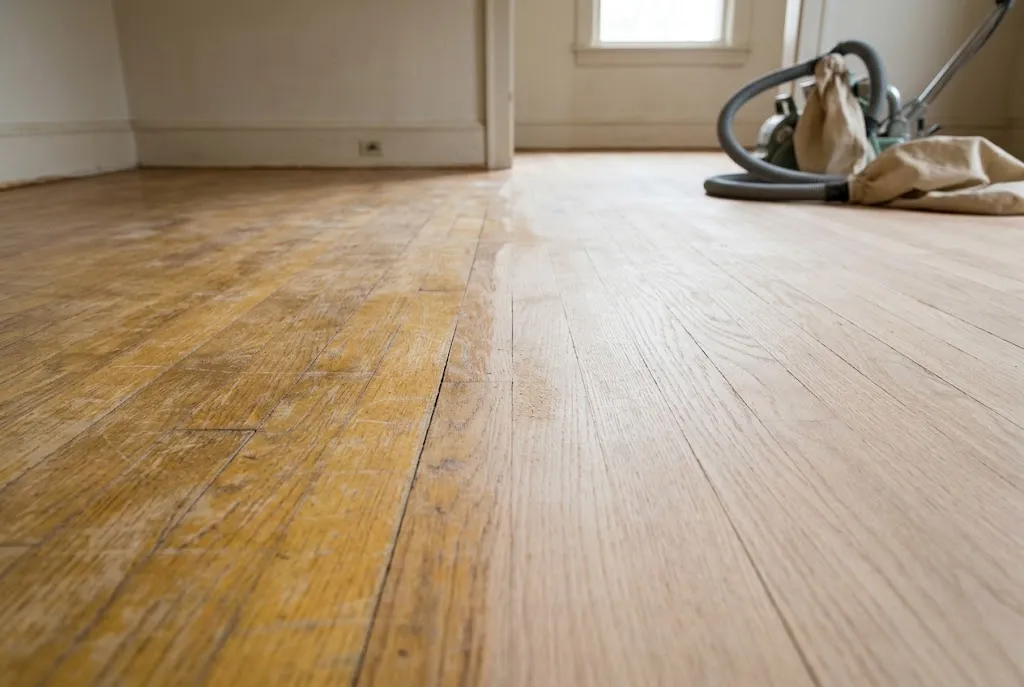
This may be the most practical trend on the list. In the same survey of wood floor owners, three-quarters said they would rather refinish than replace. The report also cites research finding refinishing can cut carbon emissions by more than 89% compared with replacement. It comes from a brand that sells floor care products, so read it with that in mind.
Refinishing can also pay off. National Association of Realtors research has ranked it among the remodeling projects with strong cost recovery at resale. Your own result will depend on your floor and local market.
Refinishing is not always possible. Deep damage, thin veneer or heavy texture can rule it out. A professional can measure what wood remains. If the finish is only lightly worn, you may just need a recoat. That means adding a new top coat without sanding down to bare wood.
Luxury Vinyl and Laminate: Modern Flooring Options for Everyday Homes
For many busy households, luxury vinyl and laminate flooring are the most practical modern flooring options. They cost less than wood or stone in most cases, and they are easier to live with. The trend now is toward better quality, not just the lowest price.
Better-Quality Luxury Vinyl
Luxury vinyl plank (LVP) imitates wood. Luxury vinyl tile (LVT) often imitates stone or ceramic. Better products now have richer texture, warmer colors and less obvious pattern repeats.
- Why it’s popular: It offers a wood or stone look with strong water resistance and easy cleaning.
- Works best in: Kitchens, basements, laundry rooms, rentals and family spaces.
- Advantages: It handles spills and daily wear well, and many types click together without glue.
- Watch out for: You cannot refinish it. Sharp objects and heavy furniture can also damage it, and damaged planks must be replaced.
- Choose it if: Practicality and budget matter more to you than having real wood.
Which Type of Vinyl Should You Choose?
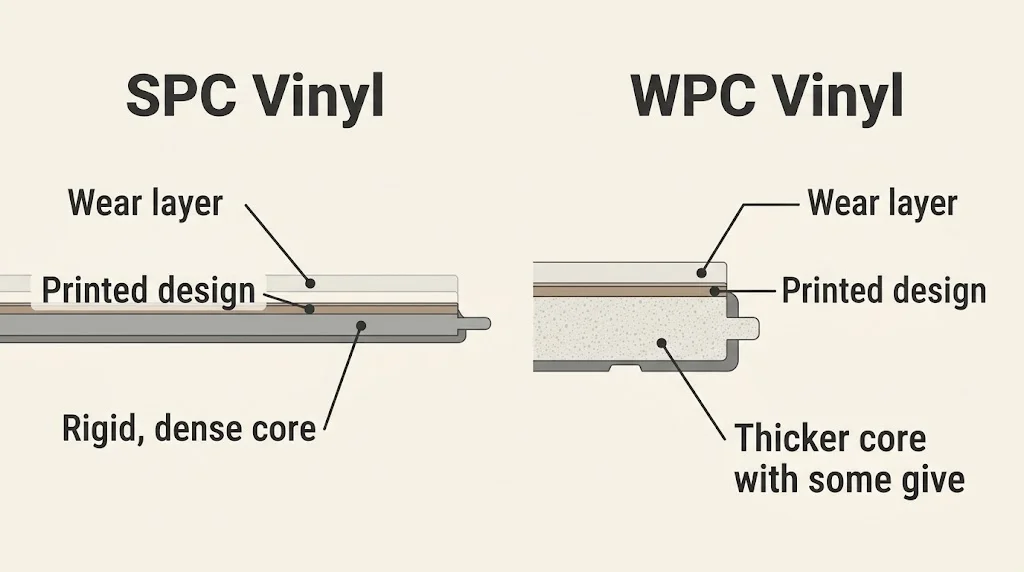
Not all vinyl feels the same. The core, or middle layer, makes the biggest difference.
| Type | What it is | Feel | Best for |
| SPC (stone plastic composite) | Rigid, dense core | Firm and hard | Busy areas and dent resistance |
| WPC (wood plastic composite) | Thicker core with some give | Softer, warmer and quieter | Living areas, kitchens and upper floors |
| Flex or glue-down vinyl | Thin, flexible planks | Close to the subfloor | Very flat floors and multifamily projects |
| Looselay vinyl | Heavy planks held mainly by weight and grip | Fairly soft | Easy replacement and some concrete slabs |
US trade reporting says shoppers in renovation projects are moving toward WPC and higher-end SPC. Comfort, sound and design matter more to those buyers. Builders and multifamily projects tend to favor SPC flooring and flexible vinyl.
Vinyl Upgrades Worth Paying For
Spend your money on features you will notice every day:
- A thicker wear layer: This clear top layer takes the abuse. For busy homes, look for about 20 mil or more. A mil is one-thousandth of an inch.
- In-register embossing: The surface texture lines up with the printed grain, so the plank looks more real.
- An ultra-matte finish: It cuts glare and makes vinyl look less plastic.
- Beveled edges: These define each plank and look closer to real wood.
- Attached acoustic backing: It can reduce noise, especially on upper floors.
Thickness alone does not guarantee quality. Compare the wear layer, core and warranty together.
PVC-Free and Hybrid Floors
Hybrid floors combine features of laminate, vinyl and other materials. Some avoid PVC, the plastic used in most vinyl flooring. Recycled PET, the plastic used in many drink bottles, is one alternative.
- Why it’s popular: Buyers want durability along with less PVC.
- Works best in: Busy homes where you want strong scratch resistance.
- Watch out for: The word “hybrid” has no single meaning, so performance varies. Read the product details and water warranty.
- Choose it if: Avoiding PVC matters to you and you’ve checked the specifications.
Water-Resistant Laminate
Laminate is a wood-based floor with a printed design and a tough clear surface. It has improved a lot, and some shoppers now choose it for its wood-based feel and value.
- Works best in: Living rooms, bedrooms, hallways and home offices.
- Advantages: It is often affordable and many types resist scratches well.
- Watch out for: Water-resistant does not mean waterproof. Standing water can make some laminate swell, and you usually can’t sand it.
- Choose it if: You want a wood look on a tight budget and the room stays fairly dry.
Tile and Stone Trends With Staying Power
The latest flooring trends in tile and stone are warm, textured and less shiny. Porcelain remains the practical workhorse, while real stone adds natural variation. Patterns are still in style, but many homeowners now use them with more restraint.
Two ratings help when you compare tile. PEI measures how well a glazed surface resists wear. PEI 3 suits most homes, while PEI 4 suits busier areas. DCOF measures grip on a wet floor. In the US, look for at least 0.42 on level floors that may get wet. Check your local standard if you live elsewhere.
Warm Limestone, Travertine and Stone-Look Porcelain
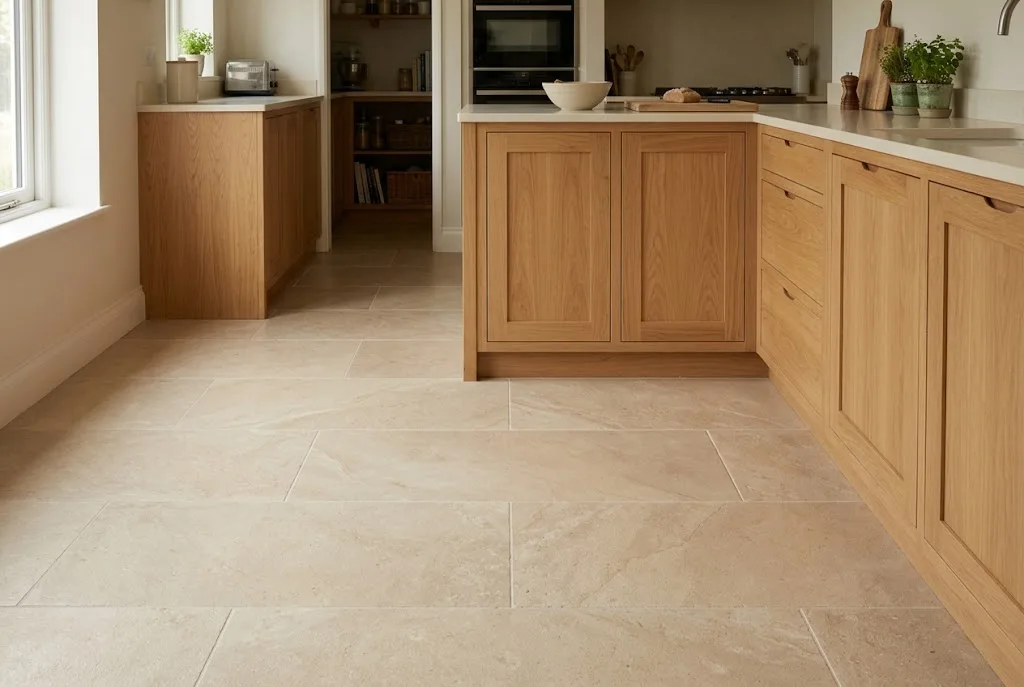
Warm stone is replacing cool gray tile, especially in kitchens and entries. Limestone and travertine bring soft color and natural variation. Stone-look porcelain gives a similar effect with less care.
- Works best in: Kitchens, bathrooms, hallways and rooms that open onto a patio.
- Advantages: Tile and stone can last for decades. Both pair well with underfloor heating.
- Watch out for: Real limestone and travertine are porous, so they can stain or etch. Etching is a dull mark left by acids such as lemon juice. They need sealing.
- Choose it if: You want a lasting, natural look. Choose porcelain if you want less upkeep.
Terracotta, Flagstone and Reclaimed Brick
Earthy floors are back, especially in rustic and Mediterranean-style homes. Each piece varies in color and shape, so the floor looks handmade.
- Works best in: Kitchens, mudrooms, garden rooms and old houses.
- Advantages: These floors have deep character, and small marks can blend in.
- Watch out for: Unglazed clay and brick absorb liquid. They need sealing before use and regular upkeep afterward. Uneven surfaces can also make chairs wobble.
- Choose it if: You enjoy natural aging and don’t mind maintenance.
Large-Format Tile With a Matte Finish
Large-format tiles are usually 15 inches or longer on at least one side. Some are much bigger. They reduce grout lines, which creates a cleaner look.
- Works best in: Open kitchens, bathrooms and modern living areas.
- Advantages: Less grout means less scrubbing, and even a small room can feel simpler.
- Watch out for: Large tiles need a very flat subfloor and a skilled installer. High-gloss versions show water spots and scuffs.
- Choose it if: You want a clean, modern look. Pick a matte or honed surface.
Terrazzo and Marble Grit
Terrazzo is a speckled surface made from chips of marble or stone set in a binder. Marble grit tile offers a similar look. This retro material is popular again in entries, kitchens and bathrooms.
- Advantages: The speckled pattern hides crumbs and dust well.
- Watch out for: Poured terrazzo can be expensive and needs a specialist. Tile versions are simpler, but they have grout lines.
- Choose it if: You like retro style and want pattern without a formal geometric design.
Checkerboard and Quieter Patterns
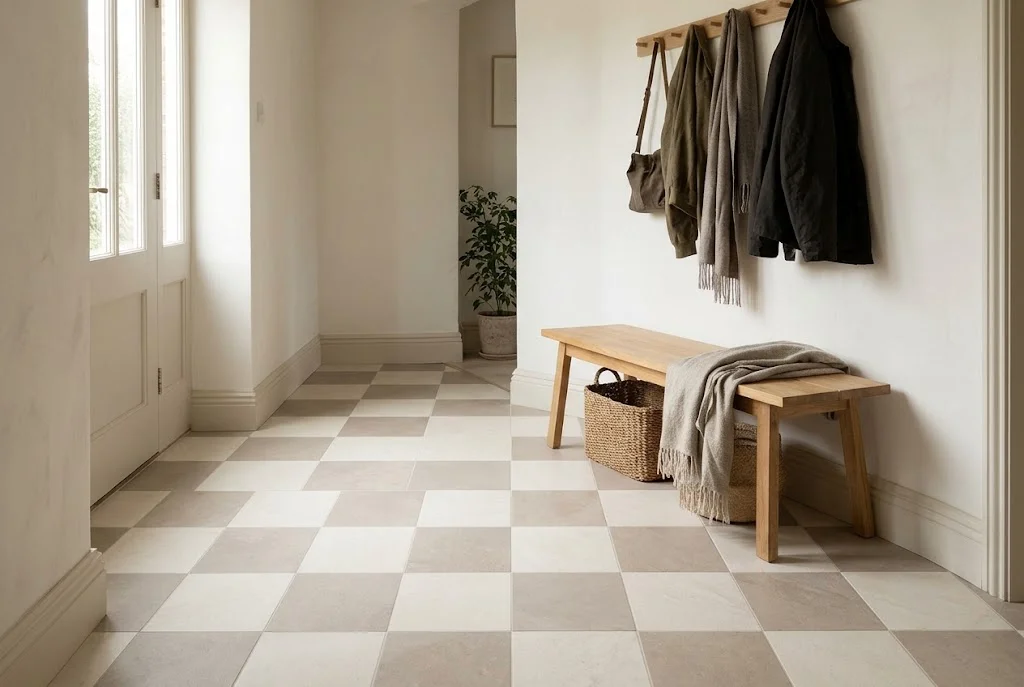
Checkerboard is a classic pattern that suits both old and new homes. Soft color pairs, such as cream and taupe, feel calmer than strong black and white. Handmade-style tile with gentle variation is also growing.
- Works best in: Entries, kitchens, powder rooms and laundry rooms.
- Watch out for: Full-room bold patterns can become tiring. In open-plan homes, they can also dominate everything around them.
- Choose it if: You want personality in a clearly defined room.
Marble and Marble-Look Floors
Marble brings instant drama, and it is especially popular in bathrooms. Porcelain versions copy the veining at a lower cost and with less care.
- Watch out for: Real marble can scratch, stain and etch. Polished marble can also be slippery when wet.
- Choose it if: You want a luxury look in a lightly used room, or you are happy with porcelain in a busier one.
Tile Drenching
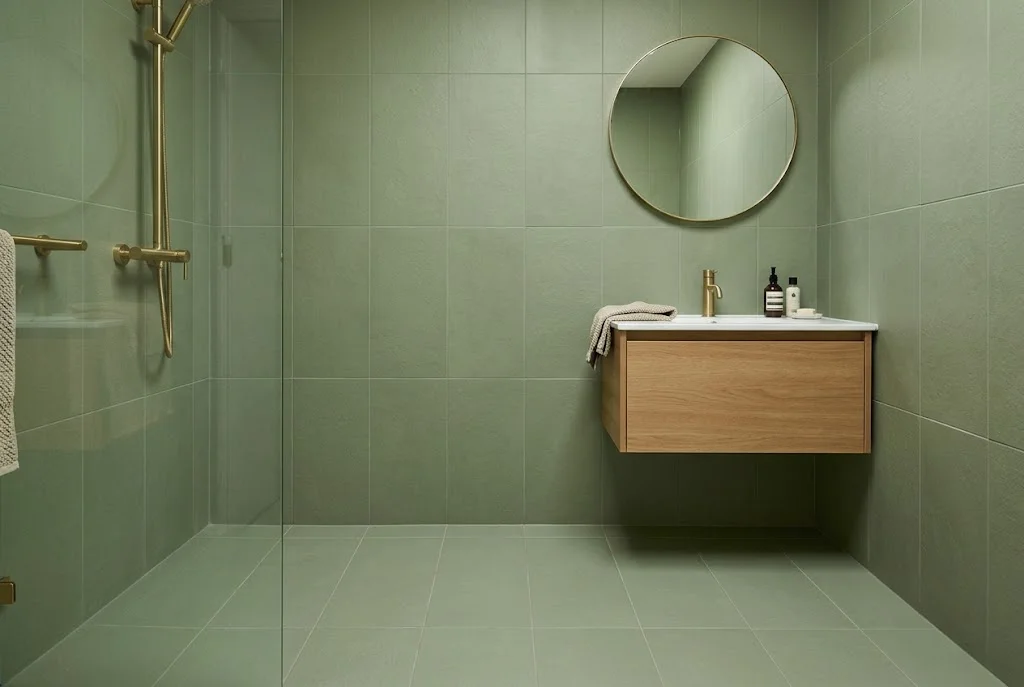
Tile drenching means using the same tile on the floor and walls. With no color break, the room feels bigger and more complete.
- Works best in: Bathrooms, powder rooms, showers and laundry rooms.
- Advantages: It creates a strong, unified look and suits wet rooms.
- Watch out for: It uses more tile and labor. Floor tile also needs good grip, while some wall tiles are not rated for floors.
- Choose it if: You want one small room to make a big impression.
Wood-to-Tile Transitions and Stone Inlays
Instead of a straight line between materials, some floors blend wood and tile in staggered shapes. Others set stone inlays into wood. Both can define the kitchen and living area without a wall.
- Advantages: You can place durable tile near the sink and warmer wood in the seating area.
- Watch out for: Skilled cutting and careful height matching add cost. Plan these details before the installer starts.
- Choose it if: Your home is open-plan and you want a custom feature.
Continuous Flooring From Room to Room
Running the same floor through several rooms makes a home feel larger and calmer. Some homeowners extend the look outside using matching or similar tile.
- Works best in: Open-plan homes and smaller homes.
- Watch out for: One floor must suit every room it covers. Check moisture limits in kitchens and slip ratings outdoors.
- Choose it if: You want a simple, connected look. It’s also a good way to avoid a patchwork of thresholds.
Microcement and Polished Concrete: Worth the Hype?
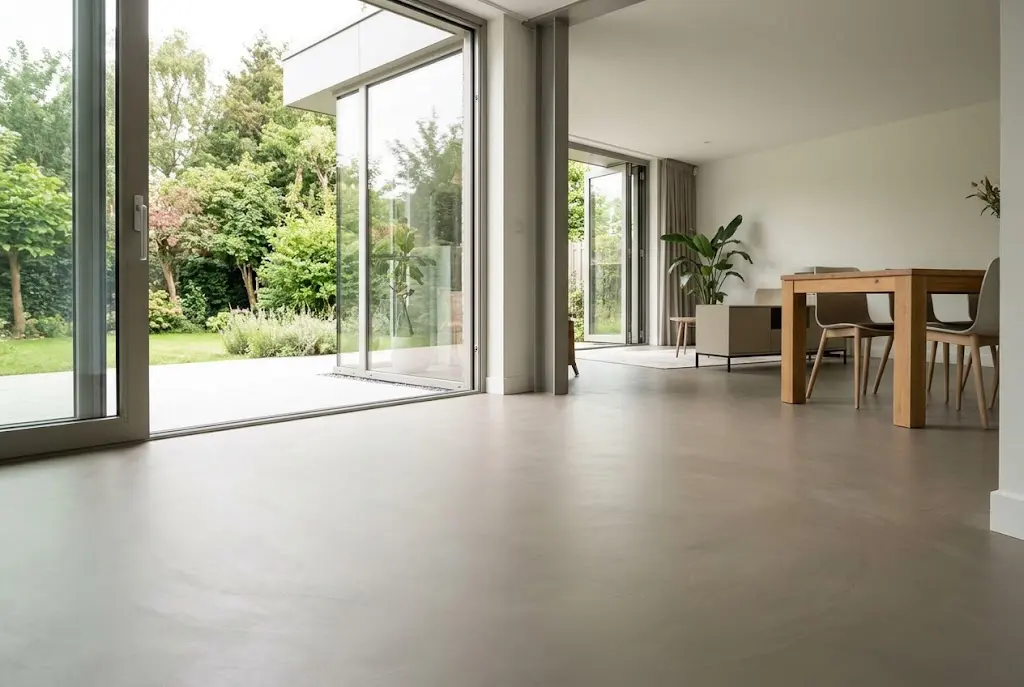
These floors are worth considering for modern, lower-traffic homes, but they are not low-maintenance by default. Experts disagree here. Some designers love the seamless look, while others warn that many homeowners underestimate the upkeep.
Microcement is a thin, hand-applied coating that gives a smooth, joint-free surface. Polished concrete is a concrete slab ground and buffed to a sheen.
- Why it’s popular: Both offer a simple, gallery-like look with few or no joints.
- Works best in: Modern extensions, kitchens and open-plan rooms. Both can work well with underfloor heating.
- Advantages: Fewer joints mean fewer places for dirt to collect. Polished concrete can also be very long-lasting.
- Watch out for: Cracks or movement underneath can show through. Polished surfaces can reveal water marks, scratches and footprints. They also feel hard underfoot.
- Choose it if: You love the look, accept natural marks and can hire an experienced specialist. In a very busy home, honed stone or matte porcelain may be easier to live with.
Soft Flooring Is Making a Comeback
Carpet is becoming a deliberate design choice again, not just the default for bedrooms. Comfort and quiet are the main reasons. It remains one of the best floors for reducing noise and adding warmth underfoot.
Wool and Natural-Fiber Carpet
Wool leads this trend. Sisal and seagrass add a woven texture, but they are rougher and less forgiving.
- Works best in: Bedrooms, stairs, upper floors and home offices.
- Advantages: Wool offers comfort, insulation and natural resilience. Natural fibers also feel richer than many synthetic deep-pile carpets.
- Watch out for: Stains may need specialist cleaning. Sisal and seagrass can mark easily and are poor choices for wet areas.
- Choose it if: Comfort and quiet are your top priorities and the room stays dry.
Stair Runners, Bold Carpet and Carpet Tiles
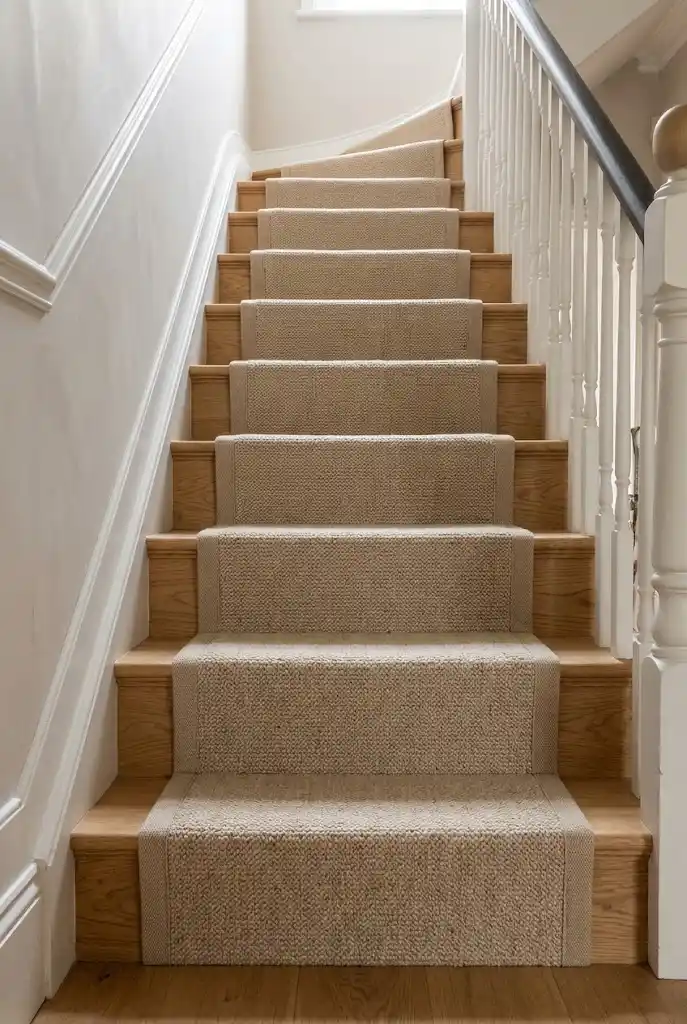
A runner is a strip of carpet down the middle of the stairs. It adds grip, cuts noise and still shows off the wood at the sides. Carpet in a deep single color is also appearing in hallways and living rooms.
Carpet tiles are worth a look too. If a pet ruins one square, you replace only that square. They suit playrooms, basements and home offices.
Pet-Friendly Carpet
Some carpets are made to resist stains and odors. They can work well in bedrooms and family rooms. Still, no carpet is as easy to clean as a hard floor after repeated pet accidents. Choose a low, tight pile so claws are less likely to snag.
Sustainable Flooring Options That Stand Up to Scrutiny
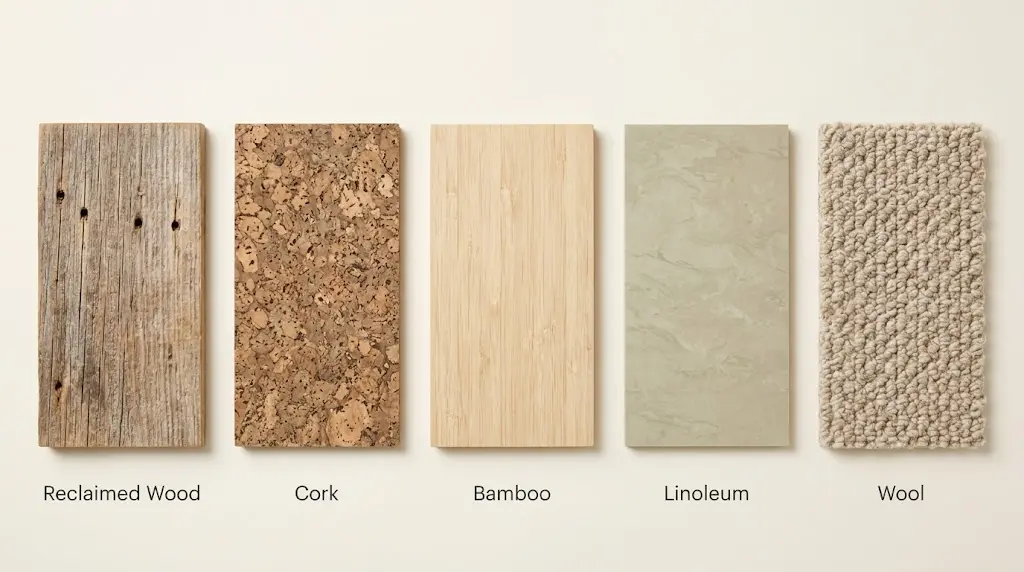
Sustainable flooring is no longer a niche request. The best option often depends on how long the floor lasts, what’s in it and how it was made. Keeping a sound floor in use can be the greenest choice of all.
Reclaimed Hardwood
Reclaimed wood gives old timber a second life. It adds history and color variation that new boards can’t easily match.
- Best for: Period homes and feature rooms.
- Watch out for: Supply can be limited, and old boards may need extra preparation. Ask about the source and any old coatings.
Cork
Cork comes from tree bark, which can be harvested without cutting down the tree. It feels soft and helps quiet a room.
- Best for: Home offices, playrooms and kitchens with careful use.
- Watch out for: Pet claws and furniture legs can mark it. Damp basements and wet rooms are poor matches.
Bamboo
Bamboo is a fast-growing grass. Strand-woven bamboo is usually harder than standard bamboo.
- Best for: Living rooms and bedrooms in stable climates.
- Watch out for: Quality varies, and it can react to changes in humidity. Check the adhesive and finish as well.
Linoleum
Linoleum is not vinyl. It’s made mainly from natural materials such as linseed oil, wood flour and cork dust.
- Best for: Kitchens, playrooms and retro-style rooms.
- Watch out for: It handles standing water less well than vinyl and may need occasional care.
Wool and Biodegradable Carpet
Wool is natural and renewable. But a carpet can have a backing or adhesive that doesn’t break down as easily. If “biodegradable” matters to you, ask about the whole product, not only the top fiber.
What Eco Labels Actually Tell You
Vague words such as “green” tell you very little. Look for specific certifications:
- FSC: Wood comes from responsibly managed forests.
- FloorScore or GREENGUARD Gold: The floor has been tested for chemical emissions that can affect indoor air.
- Green Label Plus: The carpet has been tested for low emissions.
- Low-VOC: The product releases fewer airborne chemicals. Check who tested it.
- Cradle to Cradle: The product is assessed on factors such as materials and recycling.
No label makes a floor right for every room. A greener floor that fails early and goes to landfill may not be the better choice.
Technology That Is Changing Modern Flooring
The most useful flooring technology is simple: better surfaces, better water protection and quieter floors. Marketing can make these sound more impressive than they are, so it helps to know what to check.
Tougher Surfaces
UV-cured coatings and improved wear layers help many floors resist scratches. Some pet-focused vinyl products claim major improvements over standard vinyl. Treat these as manufacturer claims, and compare warranties.
No floor is scratch-proof. Grit under shoes acts like sandpaper. Door mats, furniture pads and regular cleaning still matter.
Waterproof vs. Water-Resistant
These terms are not the same. A waterproof plank may survive water, but moisture can still reach the subfloor through edges and seams. Trapped moisture can then cause mold or damage. Water-resistant floors handle spills for a limited time, so wipe them up quickly.
Read the warranty before you buy. It may set time limits on spills or exclude flooding.
Underfloor Heating Compatibility
Porcelain, stone and many engineered wood floors work well with underfloor heating. Some vinyl and laminate products do too. Check the floor maker’s temperature limit first, because too much heat can damage a floor or void the warranty.
Quieter Floors
Sound matters more in open-plan homes, apartments and homes with remote workers. Thicker WPC, acoustic underlayment, cork and carpet can all reduce noise. Check building rules if you live in an apartment, as some require a specific sound rating.
Previewing a Floor Before You Buy
Many retailers now offer tools that show a floor in a photo of your room. In the shopper report mentioned earlier, people used their own room photos in 87% of 2025 sessions. These tools are good for narrowing options. Screen colors aren’t exact, so confirm with a real sample.
Flooring Trends That May Date Quickly
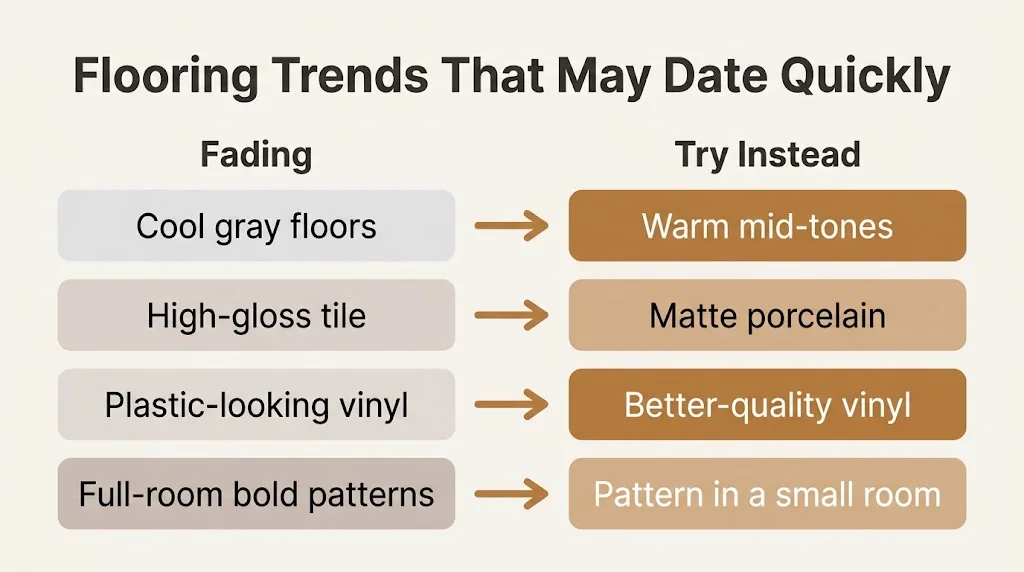
Cool gray, high-gloss tile and cheap plastic-looking vinyl are the trends most likely to feel dated soon. Very bold, room-filling patterns are also a risk. Use this table as a guide, not a rule. Some of these views come from a small number of designers, and a floor you love can still be right for you.
| Trend at risk | Why it may date or disappoint | What to choose instead |
| Cool gray wood or tile | Clashes with warm finishes and natural materials | Warm mid-tones, taupe or soft stone |
| High-gloss, large-format tile | Shows scuffs, water spots and paw prints | Matte or honed porcelain |
| Low-cost, plastic-looking vinyl | Can look and feel cheap | Better-quality WPC or thicker SPC |
| Full-room bold patterns | Can become tiring to live with | A patterned entry or powder room |
| Cement tile in wet, busy rooms | Porous and needs ongoing sealing | Cement-look porcelain |
| Polished concrete in busy homes | Shows marks and needs more care than many expect | Honed stone or matte porcelain |
| Shiny lacquered wood | Highlights scratches and feels less current | Matte or satin wood finishes |
Also be careful with any color or pattern you’ve only just started seeing everywhere online. Live with a large sample first. A strong social media trend can fade faster than the floor wears out.
How the Most Popular Flooring Materials Compare
No material wins in every category. Porcelain and vinyl handle water best, wood offers the most long-term flexibility, and carpet wins on comfort. Use this table to narrow your shortlist.
The cost column compares installed cost across these materials. Prices vary widely by region, product quality and subfloor condition, so always get local quotes. Lifespans are rough guides and depend on quality, installation and use.
| Material | Relative cost | Water tolerance | Scratch resistance | Comfort | Upkeep | Typical lifespan |
| Solid hardwood | High | Low | Medium | Medium | Medium | Decades, with refinishing |
| Engineered hardwood | Medium to high | Low to medium | Medium | Medium | Medium | Decades; depends on wear layer |
| WPC vinyl | Medium | High | Medium | Good | Low | 10-25 years |
| SPC vinyl | Low to medium | High | Medium to high | Firm | Low | 10-25 years |
| Laminate | Low | Low to medium | High | Medium | Low | 10-25 years |
| Porcelain tile | Medium to high | High | Very high | Hard and cool | Low; clean grout | 50+ years |
| Natural stone | High to very high | Medium when sealed | Medium to high | Hard and cool | Higher | Decades or more |
| Microcement or concrete | High | Medium when sealed | Medium | Hard | Medium to high | Varies with installation |
| Carpet | Low to high | Low | Can snag or crush | Very soft | Vacuum often | 5-15 years |
| Cork | Medium | Low | Low to medium | Soft | Medium; may need resealing | Varies with care |
The Best Flooring Trends for Every Room
The right flooring depends on what happens in the room. Water exposure, foot traffic and noise matter more than style. Start with these room-by-room recommendations, then adjust them for your home.
| Room | Top pick | Also works | Think twice about |
| Living room or open-plan space | Wide-plank engineered wood | WPC vinyl, laminate | High-gloss tile |
| Kitchen | Matte porcelain | Better-quality vinyl; engineered wood with care | Unsealed cement tile |
| Bathroom | Textured porcelain | Waterproof vinyl | Solid hardwood |
| Bedroom | Wool carpet | Wood, cork, laminate | Cold tile without heating |
| Basement | Waterproof vinyl | Porcelain, carpet tile | Solid hardwood, cork |
| Entry or mudroom | Porcelain, including patterned tile | Honed stone, terracotta | Light carpet |
| Hallway | Engineered wood, porcelain | Durable vinyl or laminate | Deep-pile carpet |
| Stairs | Wood with a runner | Low-pile carpet | Glossy, slippery finishes |
| Laundry room | Porcelain | Waterproof vinyl | Laminate without a strong water warranty |
| Home office | Cork | Engineered wood, carpet tile | Hard floors with no sound control |
| Kids’ room or playroom | WPC vinyl, carpet tile | Cork, linoleum | Delicate natural fibers |
How to Choose the Right Flooring Trend for Your Home
Choose for your daily life first, then use trends to guide color and detail. Many homeowners already think this way. In the survey of wood floor owners, ease of maintenance and cost ranked among the top factors, alongside looks and scratch resistance. Start with how each room is used, your subfloor and your total budget.
Busy Homes and High-Traffic Areas
High-traffic spots include entries, hallways, kitchens and the path to the back door. Grit and repeated walking cause most of the wear there.
- Strong choices: Porcelain, better-quality vinyl, durable laminate and mid-tone engineered wood with a tough finish.
- Best finishes: Matte or low-sheen, because they hide marks.
- Helpful colors: Mid-tones and speckled patterns hide dust and crumbs.
- Simple protection: Use mats at each door. Clean up grit often, since it can dull and scratch floors. The floor care brand behind that survey recommends cleaning wood floors a few times a week, yet only 33% of owners did.
Families With Children
Kids bring spills, toys and noise. Look for a floor that is easy to clean and comfortable to sit on.
- Strong choices: WPC vinyl for main living areas, carpet tile in playrooms and water-resistant floors near kitchens.
- Watch out for: Hard tile in play areas can be tough on knees and dropped toys. Add rugs if you love the look.
Homes With Pets
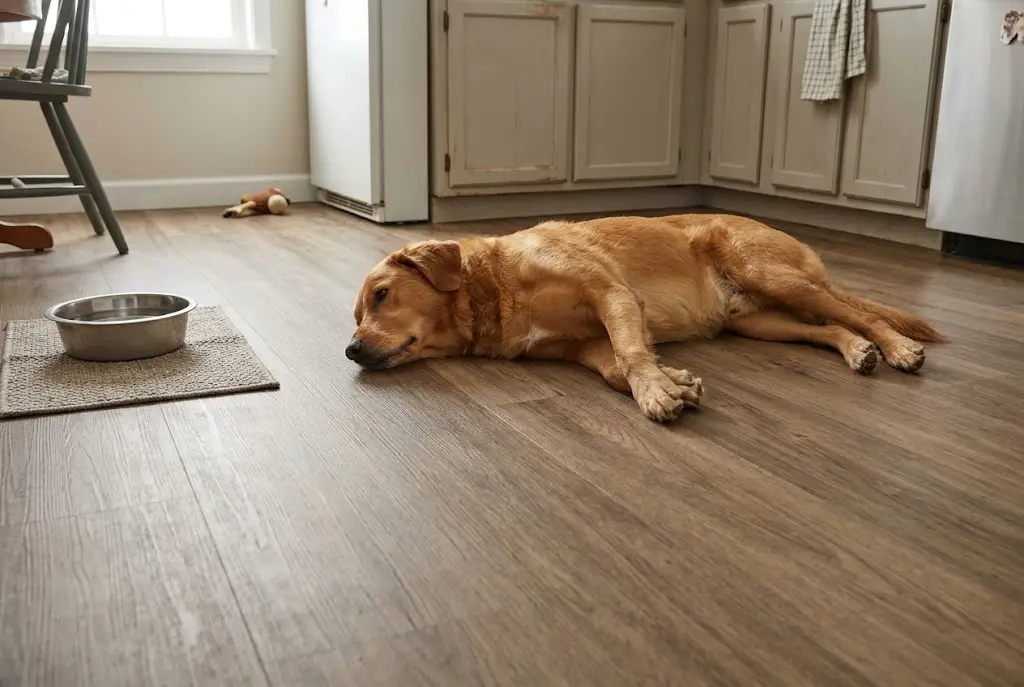
Claws, water bowls and accidents are the main concerns.
- Strong choices: Porcelain, better-quality vinyl and scratch-resistant laminate.
- Wood floors: Harder species such as hickory or oak cope better than softer walnut. A matte finish and textured grain help hide marks.
- Watch out for: Pet urine can seep through seams and sit underneath a floor. Clean accidents quickly, even on waterproof products. Slippery floors can also be hard on older dogs, so add runners where needed.
Humid, Dry and Very Hot Climates
Wood expands and shrinks with humidity. Many wood floors do best at about 30% to 50% indoor humidity, but check the maker’s guidance.
- Humid climates: Consider porcelain or waterproof vinyl for ground floors. Engineered wood is usually safer than solid wood.
- Dry climates: Solid wood may show gaps during the dry season. A humidifier can help.
- Strong sun or big temperature swings: Sun can fade floors, and some vinyl can move if it gets very hot. Use blinds or window film, and read the product’s temperature limits.
Concrete Slabs, Basements and Older Subfloors
The subfloor is the base under your finished floor. Problems here can ruin even an expensive product.
- Test moisture first: This matters on slabs and in basements. Hidden moisture can damage wood and trap mold under other floors.
- Check flatness: Wide planks and large tiles show dips and bumps more easily.
- Allow for repairs: Older homes may need leveling or new underlayment. Get this in your quote.
- Follow acclimation rules: Some wood floors must sit in the room before installation so they can adjust to your home’s conditions.
Safer Floors for Aging in Place
Aging in place means staying safe in your home as you grow older. A good floor can help.
- Choose slip-resistant surfaces, especially in bathrooms and kitchens.
- Keep transitions level between rooms to reduce trip risks.
- Consider slightly softer floors, such as cork or low-pile carpet, for comfort.
- Secure rugs or leave them out where trips are a concern.
Budget and Lifetime Cost
The lowest quote is not always the lowest long-term cost. Add up the whole job before you compare:
- Material, underlayment, trims and extra material for waste
- Removing and disposing of the old floor
- Subfloor repairs and labor
- Sealing, refinishing or other upkeep
- How soon you’ll likely replace the floor
You can also mix materials to control cost. Put your best floor in the rooms everyone sees. Use a durable, lower-cost option in basements, utility rooms and kids’ spaces. On a tight budget, a good mid-range floor is usually better than a very cheap version of a premium look.
Which Flooring Trends Offer Long-Term Value?
Warm wood, matte finishes, quality engineered floors and porcelain are among the safest long-term choices. They suit many home styles and solve real problems. Restoring a sound wood floor can also offer strong value, because you keep what you already own.
Likely to Last
- Warm, natural wood tones: These suit many styles and pair well with most furniture.
- Refinishable wood floors: You can often change the color later without replacing the floor.
- Matte surfaces: They are practical, so they aren’t purely a style choice.
- Herringbone: It has been around for centuries and works in many settings.
- Stone-look porcelain: It’s durable and easy to keep clean.
Enjoy, but Choose With Care
- Very dark floors: They look rich but need more cleaning.
- Terrazzo and checkerboard: These are classics, but the look is strong.
- Microcement: The style may last, but the finish depends heavily on installation and care.
- Saturated carpet colors: They’re easier to replace than tile, so the risk is lower.
Flooring and Resale Appeal
If you plan to sell soon, choose neutral colors and materials that appeal to many buyers. Real wood often has broad appeal, especially in main living areas. Clean, well-kept floors matter too.
Don’t assume you’ll get back every dollar. Results depend on your area, your home’s price range and the condition of the floor. A local real estate agent can tell you what buyers expect nearby.
How to Balance Trends With Timeless Design
A simple rule helps: the harder a floor is to change, the safer its design should be.
- Keep large, permanent floors simple. Choose natural colors for the main living areas.
- Use small rooms for bold ideas. Powder rooms, entries and laundry rooms are low-risk places to try bolder modern flooring ideas.
- Let rugs carry the trend. A checkerboard rug or layered vintage pattern gives you a fresh look for far less money. You can also replace it later.
- Add texture before you add contrast. Visible grain and honed stone tend to stay interesting longer than loud color.
Commercial Flooring Trends Worth Knowing
Commercial spaces share many home trends, but performance comes first. Offices, shops and hotels often use glue-down vinyl because it handles rolling carts and chairs well. Carpet tile remains useful because it controls noise and allows spot replacement. PVC-free options are also growing, and patterned wood is showing up in boutique spaces. Always choose a product rated for commercial use if your space gets heavy traffic.
Before You Order: A Final Flooring Checklist
- Test large samples in the actual room and light.
- Ask for a moisture and flatness check of the subfloor.
- Confirm that the floor suits any underfloor heating.
- Plan transitions and door clearances early.
- Read the warranty’s terms on water, pets and installation.
- Order extra material for cuts and future repairs. Patterned layouts need more.
- Ask what cleaning products the maker approves, so you don’t void the warranty.
- Get a written quote that includes removal, repairs, trims and disposal.
Choosing a Floor You’ll Still Like in 10 Years
Today’s most popular flooring trends point in a clear direction: warmer colors, real textures, softer finishes and floors built for daily use. That doesn’t mean every trend belongs in your home.
Start with the room and how you live. Choose a material that can handle it, then use trends to guide color, finish and pattern. Keep large floors simple, and save bold ideas for small rooms or rugs.
Your next step is simple. Pick your top two options and bring home large samples. Live with them for a few days, then ask an installer to check your subfloor before you order.
Frequently Asked Questions About Flooring Trends
What is the most popular type of flooring right now?
Luxury vinyl draws the most shopper interest in the Americas, with tile second, based on 2025 floor-preview data. Hardwood stays the premium favorite. In design, warm wood tones, matte finishes and patterned layouts are leading. The best choice still depends on your room and lifestyle.
Are warm or cool floor tones more popular?
Warm tones are more popular for new flooring. Honey, caramel and mid-tone browns are strong choices because they feel inviting and pair well with natural materials. Cool gray still appears in many homes, but designers increasingly see it as a fading look.
Are gray floors going out of style?
Cool gray is losing favor, especially among designers. It can clash with today’s warm woods, fabrics and paint colors. You don’t need to replace a good gray floor, though. Warm rugs and furniture can balance it, while new buyers may prefer warmer tones.
What flooring is going out of style?
The looks most at risk are cool gray, high-gloss tile, plastic-looking vinyl and bold patterns across entire rooms. Their main problems are appearance and upkeep. Styles change slowly, so you don’t need to replace a floor that still works well and suits your home.
Is hardwood flooring still popular?
Yes. Hardwood remains a premium, widely admired choice. White oak, wide planks, herringbone and matte finishes are current favorites. Many owners also prefer refinishing old floors to replacing them. Engineered hardwood has expanded where wood can go, including many concrete slabs and heated floors.
Is luxury vinyl plank going out of style?
No, but the cheapest versions are losing favor. Many shoppers want better texture, warmer colors and a more comfortable feel. Quality luxury vinyl remains a practical choice for kitchens, basements and busy homes. Check the wear layer, core type and warranty, not just the price.
What floor color is the most timeless?
Natural mid-tone wood is one of the safest choices. It suits many home styles, works with most furniture and hides everyday wear better than very dark or very pale floors. Test large samples at home, because undertones can look different in your light.
Which flooring is best for dogs and kids?
Porcelain and better-quality vinyl are among the easiest choices. They handle spills and cleaning well. WPC vinyl feels softer than tile, which helps in play areas. If you want wood, choose a harder species with a matte finish, and wipe up accidents quickly.
What flooring lasts best in high-traffic areas?
Porcelain is among the most durable options for entries, hallways and kitchens. Better-quality vinyl and scratch-resistant laminate are good lower-cost options. Choose a matte surface and a mid-tone color to hide wear. Door mats also help by stopping grit before it spreads.
Which flooring is best for resale?
Real wood in a neutral tone has broad appeal in main living areas. Refinishing a sound wood floor may offer good value before a sale. Porcelain often suits kitchens and baths. A local agent can tell you what buyers in your area expect at your price point.
Should the same flooring run through the whole house?
Using one floor makes a home feel larger and more connected, especially on the same level. It only works if the material suits every room. Many homes do better with wood or vinyl in living areas and tile in wet rooms, joined by planned transitions.
Are herringbone floors a passing trend?
Herringbone has a long history, so it isn’t a short-lived fad. Its current popularity may rise and fall, but the pattern has stayed in use for generations. It costs more to install, so use it where you can enjoy it most, such as an entry or living room.